'%3e%3cpath%20d='M12.4997%201.33325C10.39%201.33325%208.32772%201.95884%206.5736%203.13091C4.81947%204.30298%203.4523%205.96888%202.64496%207.91796C1.83763%209.86704%201.62639%2012.0118%202.03797%2014.0809C2.44955%2016.15%203.46545%2018.0506%204.95721%2019.5424C6.44897%2021.0342%208.34959%2022.0501%2010.4187%2022.4616C12.4878%2022.8732%2014.6326%2022.662%2016.5816%2021.8546C18.5307%2021.0473%2020.1966%2019.6801%2021.3687%2017.926C22.5408%2016.1719%2023.1663%2014.1096%2023.1663%2011.9999C23.1663%209.17094%2022.0425%206.45783%2020.0422%204.45745C18.0418%202.45706%2015.3287%201.33325%2012.4997%201.33325ZM12.4997%2021.3333C10.6537%2021.3333%208.84922%2020.7859%207.31436%2019.7603C5.7795%2018.7347%204.58322%2017.2771%203.8768%2015.5716C3.17039%2013.8662%202.98555%2011.9896%203.34568%2010.1791C3.70581%208.36859%204.59473%206.70554%205.90002%205.40025C7.20531%204.09496%208.86835%203.20605%2010.6788%202.84592C12.4893%202.48579%2014.3659%202.67063%2016.0714%203.37704C17.7768%204.08346%2019.2345%205.27974%2020.2601%206.8146C21.2856%208.34945%2021.833%2010.154%2021.833%2011.9999C21.833%2014.4753%2020.8497%2016.8492%2019.0993%2018.5996C17.349%2020.3499%2014.975%2021.3333%2012.4997%2021.3333Z'%20fill='white'/%3e%3cpath%20d='M19.167%208.06667C19.042%207.9425%2018.8731%207.8728%2018.697%207.8728C18.5208%207.8728%2018.3519%207.9425%2018.227%208.06667L10.8269%2015.4333L6.82695%2011.4333C6.70495%2011.3016%206.53562%2011.2237%206.35621%2011.2169C6.1768%2011.21%206.00201%2011.2747%205.87028%2011.3967C5.73856%2011.5187%205.66069%2011.688%205.65382%2011.8674C5.64694%2012.0468%205.71162%2012.2216%205.83362%2012.3533L10.8269%2017.3333L19.167%209.01333C19.2294%208.95136%2019.279%208.87762%2019.3129%208.79638C19.3467%208.71514%2019.3642%208.62801%2019.3642%208.54C19.3642%208.45199%2019.3467%208.36485%2019.3129%208.28361C19.279%208.20237%2019.2294%208.12864%2019.167%208.06667Z'%20fill='white'/%3e%3c/g%3e%3cdefs%3e%3cclipPath%20id='clip0_2790_31187'%3e%3crect%20width='24'%20height='24'%20fill='white'%20transform='translate(0.5)'/%3e%3c/clipPath%3e%3c/defs%3e%3c/svg%3e)


AI-Powered Bug Bounty Triage: Why We Built an MCP Server for HackenProof

Why Bug Bounty Triage Consumes So Much Time
Running a bug bounty program is a commitment that scales with success – and not always in a comfortable way. Every new researcher who joins, every new scope you add, brings more reports. And every report demands human attention before any security value can be extracted from it.
In practice, triage is a repetitive, manual process. A reviewer opens a report, checks whether the target is in scope, looks up the severity classification guide, reviews past reports for duplicates, composes a standardized response, updates the status, assigns a severity, and adds labels. Then they do it again. And again.
For companies with active programs, this routine can consume hours of a security engineer’s week – time that could be spent on actual remediation, architecture review, or threat modeling. The bottleneck isn’t the number of vulnerabilities being found. It’s the throughput of the humans processing them.
What Is the Model Context Protocol (MCP) and How It Helps Security Teams
The Model Context Protocol (MCP) is an open standard that allows AI assistants like Claude to connect directly to external tools and data sources. Instead of copy-pasting information into a chat window and hoping the model gives a useful answer, MCP lets the AI read live data, take actions, and operate as a genuine participant in a workflow.
For security teams, this is a meaningful shift. An AI assistant with MCP access to your bug bounty dashboard doesn’t just answer questions about vulnerability classes – it can pull a live report, cross-check it against your program’s scope rules, look for duplicate submissions, and draft a triage decision with a properly formatted response, all in a single session.
What We Built
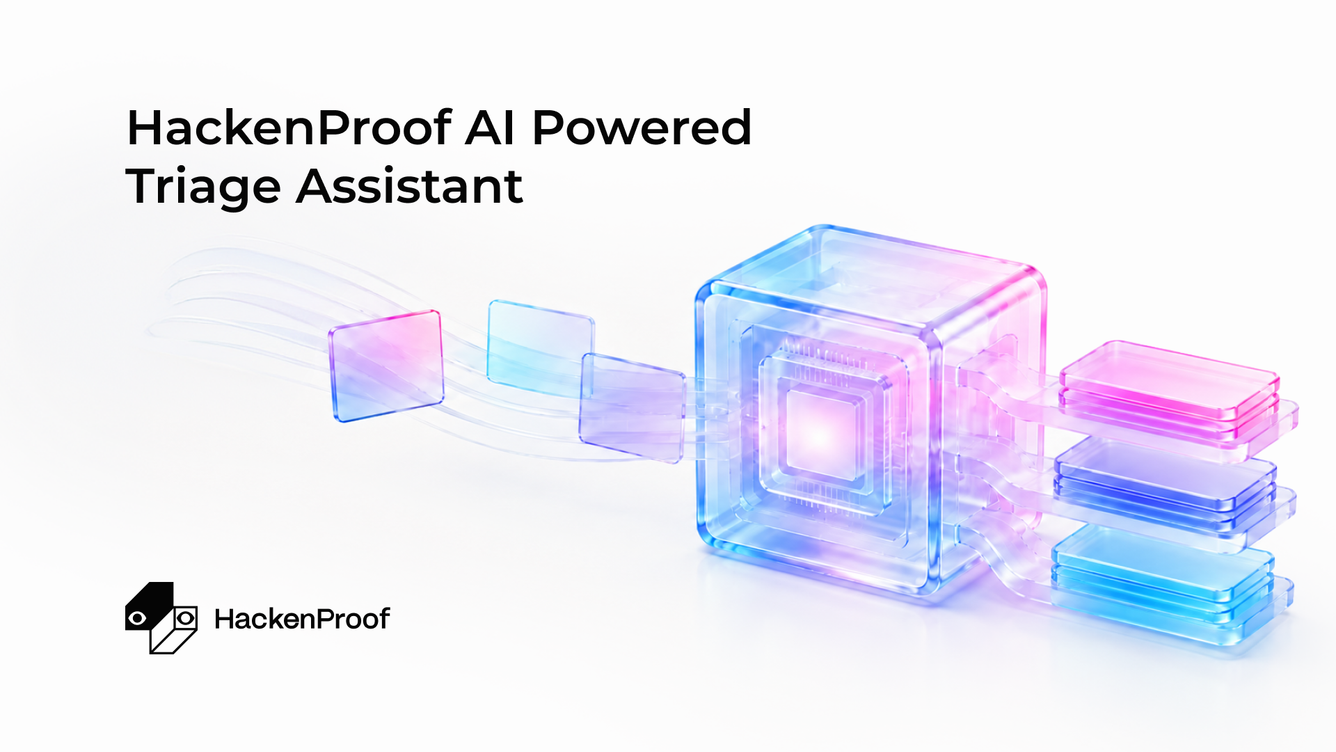
We developed an open-source MCP server for HackenProof that gives AI assistants direct, authenticated access to the HackenProof dashboard. Through this server, an AI can:
- Read and search reports – filter by severity, state, labels, or free text across an entire program
- Retrieve full report details – including researcher descriptions, reproduction steps, attachments, and comment history
- Check program scope and rules – automatically verify whether a target is in scope and what the reward structure is
- Reference official severity classifications – web/mobile, smart contract, and blockchain protocol guidelines are available as built-in resources
- Take triage actions – change report state, assign severity, add labels, and post comments, all with proper formatting
Each user authenticates via their own session credentials passed in request headers, so a single hosted instance can serve an entire triage team simultaneously without credentials leaking between sessions.
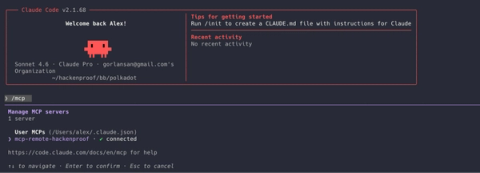
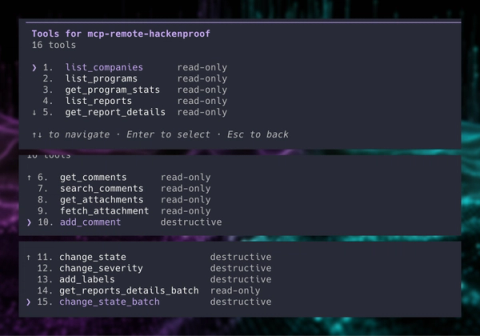
With 16 tools available so far (more to come), covering all features on a platform:
Open-Source Skills for Consistent Triage
Beyond the server itself, we are publishing the triage skills we use internally as open source. Skills are structured prompts that guide the AI through a complete triage workflow – checking PoC requirements, identifying commonly unacceptable vulnerability classes, detecting duplicates, assigning severity according to official classifications, and composing professional responses.
You can use it, and contribute to it right here:
https://github.com/hackenproof-public/skills
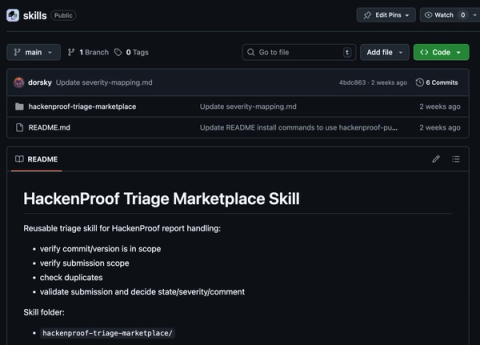
These skills encode the institutional knowledge that experienced triage reviewers carry in their heads: when to reject a governance attack report, how to handle fee-on-transfer token issues, what constitutes a valid PoC for a smart contract finding. Making them open source means any team running a HackenProof program can adopt the same baseline and adapt it to their standards.
Getting Started with the HackenProof MCP Server
The MCP server is available for all HackenProof clients, if you don’t have access to it, feel free to reach out to your Account Manager. Once running, any Claude user on your team connects by pointing their local MCP configuration at the server URL with their own HackenProof session credentials – no shared secrets, no per-user setup on the server side.
We see this as the first step toward AI-assisted security operations that are genuinely useful rather than decorative. Triage is the obvious starting point because it is high-volume, rule-driven, and currently expensive in human time. The same approach applies to first-response SLA management, duplicate clustering across programs, and longitudinal pattern analysis across your vulnerability history.
If you run a bug bounty program on HackenProof and want to reduce the manual load on your team, we would be glad to walk you through the setup.
P.S. Beyond Triage: AI as a Knowledge Base for Vulnerabilities
The most underappreciated benefit of connecting an AI assistant to your bug bounty data is not the time saved on individual reports – it is the accumulation of institutional memory that happens over time.
Every triaged report is a data point. A vulnerability class that keeps appearing in your scope. An attack pattern that three different researchers found independently. A category of findings your developers consistently introduce. When an AI assistant has direct access to your full report history, these patterns stop being invisible.
A few concrete use cases this unlocks:
- Faster first response on new submissions. When a new report arrives, the AI can immediately cross-reference it against your existing triaged reports, identify whether a similar finding was already submitted, and flag a likely duplicate before any human reviewer touches it. What previously required a researcher to manually search through hundreds of reports takes seconds.
⠀ - Proactive vulnerability pattern recognition. If your program has received multiple reports touching the same contract function or the same API endpoint, that is a signal worth surfacing. An AI with access to your history can identify clusters of related findings and escalate them as a pattern worth deeper investigation – even when no individual report meets the threshold for critical severity on its own.
⠀ - Low-hanging fruit, systematically closed. Informational and low-severity findings are easy to deprioritize. They accumulate, they get marked as acknowledged, and they are rarely acted on. An AI assistant can periodically review your backlog of low-severity findings, group them by component or vulnerability class, and produce a prioritized remediation brief – turning a pile of ignored reports into an actionable list.
⠀ - Institutional knowledge that does not walk out the door. Triage decisions made by experienced reviewers contain real expertise: why a particular issue was considered out of scope, why a medium was elevated to high, what context made a finding credible. When that expertise is encoded in comments and labels on your reports, an AI with access to the full history can apply it consistently – even when the person who made the original decision is no longer on the team.
In short, MCP turns your bug bounty program from a reactive intake queue into a queryable knowledge base. The AI does not replace the security engineer’s judgment – it makes sure that judgment is applied at scale and that nothing obvious is missed.
More topics: